Recycled Content in Plastic Packaging: Article 7 of the PPWR
06/15/1982 | 4 min read
The EU Packaging and Packaging Waste Regulation (PPWR) introduces binding recycled content requirements for plastic packaging under Article 7, fundamentally changing how packaging projects must be planned for the future. From 2030 onward, the use of recycled plastics in plastic packaging will become mandatory across the EU, with initial minimum quotas taking effect in 2030 and more ambitious requirements following in 2040.
For brand owners and fillers, PPWR compliance is not just a regulatory topic, but a question of long-term material availability, product performance and investment security.
Mandatory PCR Quotas
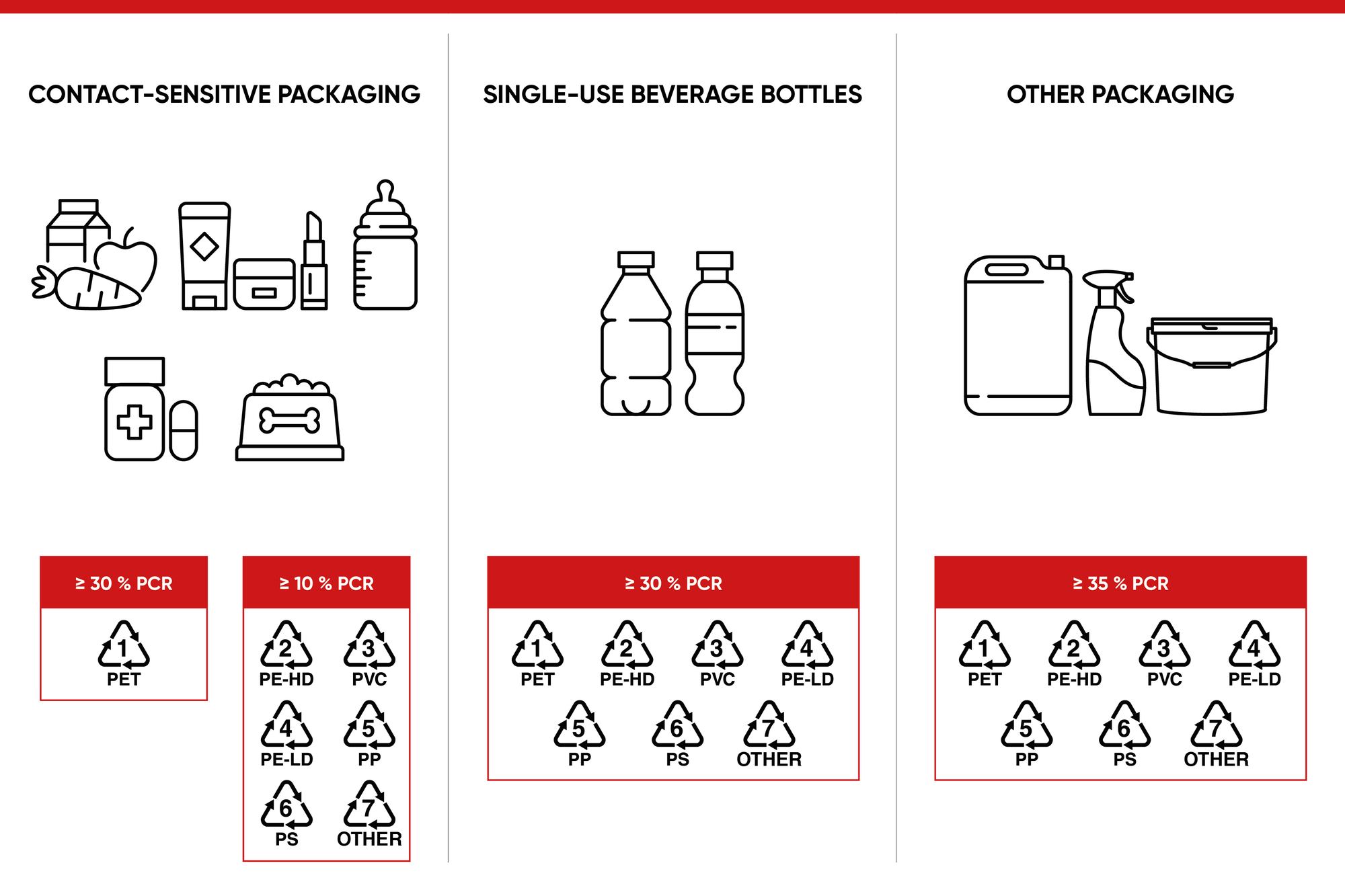
PPWR Article 7 sets mandatory minimum PCR quotas for plastic packaging placed on the EU market from 1 January 2030. Only post-consumer recycled plastics, meaning materials collected after previous use by households, businesses, or institutions, count toward the targets. The article sets differentiated PCR requirements depending on application and polymer:
Packaging Category
2030
Contact-sensitive PET (except single-use beverage bottles)
30%
Contact-sensitive plastics other than PET
10%
Single-use plastic beverage bottles
30%
Non-contact-sensitive plastic packaging
35
For manufacturers, the challenge is not only hitting a target value, but ensuring that each packaging component can be evidenced consistently across a multi-supplier supply chain.
Documentation and Verification
PPWR compliance under Article 7 requires transparent and reliable information on recycled content at packaging component level, as well as structured technical documentation. Greiner Packaging supports its customers by providing product‑specific data on material composition, recycled content shares and application boundaries. These data points enable customers to prepare their own PPWR technical documentation efficiently and consistently, without transferring manufacturer responsibility or legal accountability to Greiner Packaging. In this way, customers benefit from regulatory clarity while retaining full control over their compliance strategy.
A critical success factor for Article 7 is the correct selection of recycled materials, especially in contact‑sensitive applications. “Article 7 is not just about meeting percentage targets – it is about integrating recycled materials into real packaging applications in a safe, scalable and compliant way,” explains Florian Aschermayer, Global Senior Expert Sustainable Material Excellence at Greiner Packaging. With long‑standing expertise in r-PET, r-PP and r-PS solutions, Greiner Packaging supports customers in making informed material decisions that align performance requirements with future PPWR targets.
Conclusion
Companies face both a challenge and an opportunity:
to rethink packaging strategies,
secure reliable PCR access, and
build robust compliance processes that stand the test of time.
Beyond materials alone, Greiner Packaging positions itself as a solution partner throughout the entire packaging development process. From intelligent design‑for‑recycling concepts and material feasibility assessments to structured product information, Greiner Packaging empowers customers to reduce regulatory uncertainty, accelerate decision‑making, and confidently transition into a future shaped by circular, compliant packaging solutions.
Disclaimer: This article is provided for general information purposes only and does not constitute legal advice. The information given in this article reflects our current state of knowledge at the time of publication and may be subject to change.